I clearly remember watching the first two parts of Francis Ford Coppola’s The Godfather with my father. I had borrowed the book because it clearly wasn’t appropriate for a 12-year-old, but at some point my parents realised that I was old enough to appreciate the movie for what it was. It blew my mind, to say the least. The world created by Mario Puzo was so imperfect, filled with imperfect characters who took wrong decisions, and compounded it by doing it something even more rash. That’s what made it feel real and genuine, because nothing in the story was happening to appease the audience. The Godfather III somehow loses that plot. The film knew what it had to live up to and tried to be different, and it succeeded, just not the way its makers wanted.
Take your mind back to the first scenes of Part I and Part II. The visuals start as if you are waking up from a deep slumber. The purpose of the scene and the players starts getting clear at their own pace, just like it would take you time to make sense of things in the morning. You connect the dots yourself — who is who, and what are they doing in this particular context? The third part tries to do something similar, but while it tries to give context, it loses that quality of letting the audience figure out the tale for themselves.

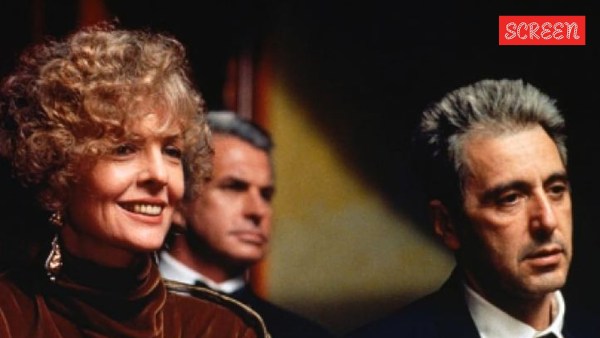 A still from The Godfather III. (Photo: IMDb)
ALSO READ: Demon Slayer Infinity Castle review: True to its title, the film appears to go on till infinity
The first line of The Godfather is “I believe in America,” while the second film just opens with a continuation of the first part. The very first dialogue of the third film is, “It has now been better than several years since I moved to New York.” The stark difference in these lines is that the first part started with a line that was a belief, a given, something irreproachable. You didn’t have to think of anything beyond that, because it was a firm starting point. The second film reaped the benefits of this, as it just picks up where its predecessor left off. The third part starts with a line which tells the viewers something, which instantly takes them away from the film and makes them wonder what happened in the interim.
Yes, filmmakers should aim for making films that make the audience feel that these characters and their story don’t finish with the end credits — that they exist beyond the screen and what is being told on it. But at no point should those actions or dialogues be so blunt that the viewers start thinking about them more than the film. They just need to be aware of the possibilities, not live in them.
Now another point of contention I have with this film is actually not its fault. Michael Corleone, the big bad man who ruled Vegas, Havana and New York, is now an ailing father trying to invite his children to an event held in his honour. We know that he is a failed husband and an absentee father, and through the movie we realise that he wasn’t the most successful leader. In some sense, you could argue that the franchise behaves exactly the way the Corleone family does — I’ll explain.
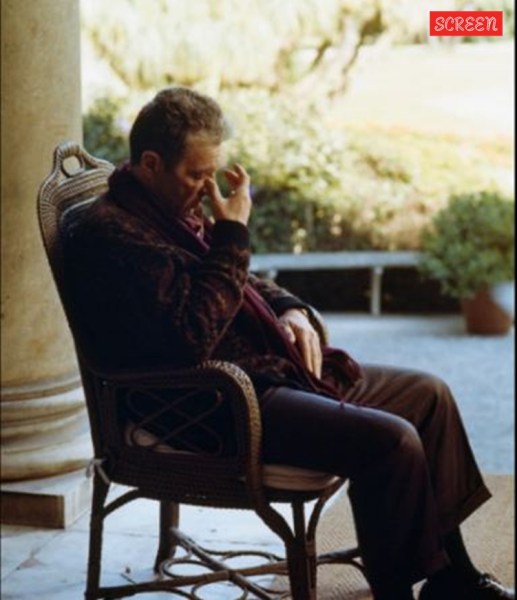 Al Pacino as Michael Corleone in The Godfather III. (Photo: IMDb)
The first film shows us that Vito Corleone is at the top of the food chain, with the FBI failing to catch on and other families begrudgingly sitting in his shadow. But that is not why he is a good leader. Michael might have built on his father’s legacy and expanded it beyond anyone’s expectation, but he could never be as impactful or consistent. That’s because he forgot the one thing that gave his father the most amount of strength, the strength that brought him back to life even after an assassination attempt — family.
Story continues below this ad
Even though Michael joined the army or later joined the family business, all against his father’s initial wishes, he never put him in a compromising situation. Because his father never let him forget that the most important thing in this whole world is family. Michael displays these qualities sometimes, for example, when he tells Fredo to “never go against the family.” But Fredo doesn’t listen to him out of respect; he adheres to him out of fear. That is one of the primary reasons why he ultimately betrays him, because fear only works if you think you will get caught. If Fredo respected his brother and his family’s name, he would never side with Roth.
Pacino is still a great actor, and Andy Garcia makes the best with what he has, but the characters just aren’t there anymore, and the one person who had to understand this was Coppola. He still made this film like everyone was coming out on top, like there was ever going to be a happy ending to all this. He puts an unnecessary amount of importance on characters who have no juice left anymore, the biggest example being Michael. The arc is done; he failed. Let the man go for God’s sake. Maybe focus on Anthony and how it feels to grow up with a father wanted by everyone in the country.
The tough childhoods of these two kids, Mary and Anthony, could have been the saving grace for this film, because then maybe people would actually care. Also, why did that romantic arc exist between Mary and Vincent — You can’t just dangle the idea of forbidden love and hope that it works for the audience. The poor girl goes out in the most Bollywood manner (even we have sometimes done it better), not thinking about herself or her brother’s success, but about her potential boyfriend. How hard is it to give someone with such a rich backstory an actual important part in the film?
Story continues below this ad
 Sofia Coppola as Mary Corleone in The Godfather III. (Photo: IMDb)
Coppola uses her character to just induce guilt and remorse in Michael, which in my opinion was a waste. She ends up being a bargaining chip, which so many female characters suffer with even now. Anthony was ignored by his father in the first two films (a kiss on the forehead once every 3 years doesn’t count), and he was ignored by Coppola in the third film. Make the gangster’s kid an artist, of course; that’s original.
All in all, it just doesn’t live up to the name. When iconic characters come to the screen after a long time, you expect fireworks, but Coppola just didn’t give this story its due. It feels like he himself did not believe that this film could be or do anything, and that is just sad from a director’s point of view. They should have just let it go, just let it be. He was already etched in history, but Coppola got greedy, and just like Michael, it blew up in his face. The final shot of the film tells you everything you need to know about an old and alone Michael lying half dead on his lawn chair, only to fall down and pass away. That’s what happened with The Godfather franchise; it came, conquered, crashed and croaked away into oblivion.