AI is reshaping countless aspects of life. But so far, its applications have focused mostly on our singular species, Homo sapiens. What if humans used AI to better understand the nonhuman beings with whom we share the planet?
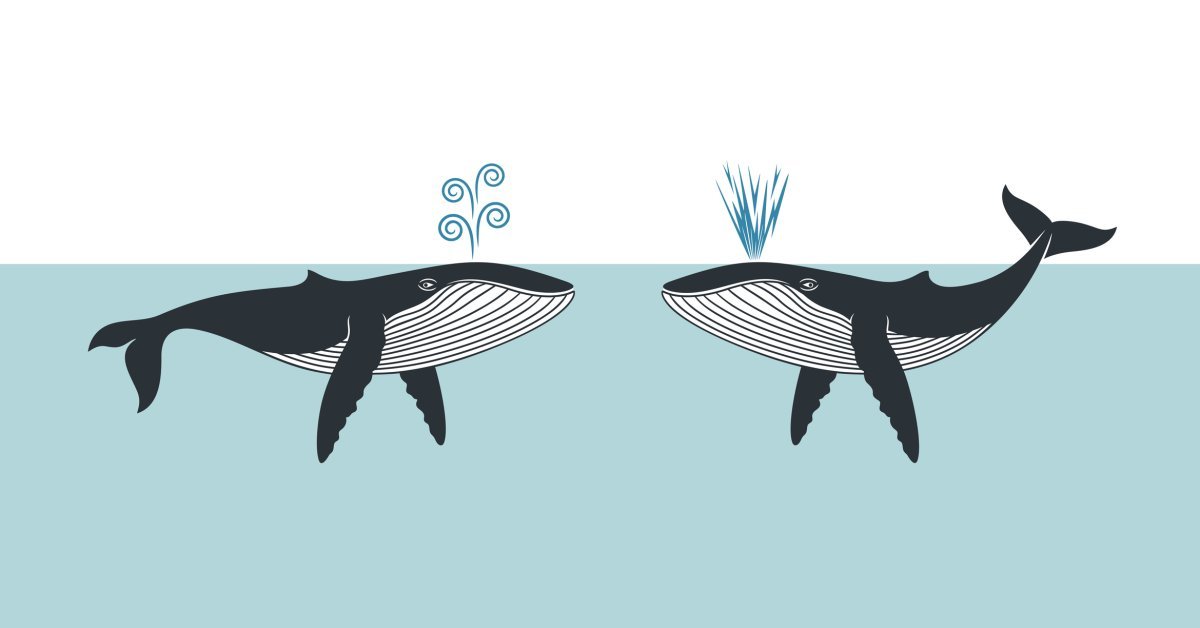
We are just now opening a portal to that world. Advancements in machine learning and robotics are making possible the study of nonhuman animal communication with unprecedented depth and precision. Researchers are getting closer to identifying the unique names that elephants use for each other; understanding how moths hear the distress calls of plants; and decoding the complex sounds of sperm whales, a highly intelligent, social species whose clicks have been found to contain the equivalent of vowels and a phonetic alphabet, resembling the building blocks of human language.
Scientists now have the tools and capabilities to assemble and analyze the massive datasets needed to move beyond speculation, towards translation and even interspecies communication. Much like the microscope and telescope revealed hidden realms of our inner and outer worlds, new technologies are unveiling messages beyond the reach of the human senses.
Fifty years ago, humanity embarked on another planetary listening exercise. When Roger and Katy Payne recorded the elaborate songs that humpback whales use to communicate across the oceans, these haunting melodies became a best-selling album that struck an emotional chord with humans and inspired the “Save the Whales” campaign, which prevented several whale species from going extinct. Science inspired wonder, wonder fostered empathy, empathy rekindled hope, and hope spurred collective action.
Collective decisions spurred on by scientific wonder and discovery have been pivotal to the trajectory of humans and nonhumans alike. However, the scale, the speed, and the stakes of today’s technological, ecological, and societal disruptions are exponentially higher. Just as AI and other cutting-edge tools create unprecedented opportunities for understanding and protecting nonhuman animals, they also pose serious risks of further manipulation and exploitation. Will AI-powered tools help us reconnect with nature and each other? Or will they further sever our fraying threads with Earth’s web of life? Will listening to nonhuman animals inspire greater protection for the more-than-human world? Or will the troves of data being amassed on nonhuman animals be used to further commodify and objectify them?
Science is unlocking, in the words of science journalist Ed Yong, “an immense world” of other animals’ lived experiences—and an immense new world of environmental law and policy. Messages from nonhuman animals themselves will bolster the case for their rights. Language has often been cited as a uniquely human trait in arguments against extending rights to animals. But what if whale sounds are expressions of an ancient, refined intelligence predating humans—”the equivalent of epic poetry, history, and elaborate codes of social interaction,” as scientist Carl Sagan pondered 52 years ago? Could this help extend some of the rights normally bestowed on humans to nonhuman animals with complex languages?
These are questions evaluated by Project CETI (Cetacean Translation Initiative) and MOTH (the More-Than-Human Life Program at NYU Law) as part of an interdisciplinary effort to consider the legal implications of translating nonhuman animal communication. CETI’s research on sperm whales demonstrates that these highly auditory and social beings have communication systems with linguistic complexity. MOTH’s research suggests that these findings offer solid evidence for strengthening the implementation of existing laws, influencing court rulings in different countries, and even catalyzing new rights for sperm whales and other cetaceans.
For instance, as MOTH and CETI argue in a forthcoming article in the journal Ecology Law Quarterly, a better comprehension of cetacean communication would provide additional evidence about the existential threats to cetaceans stemming from underwater noise from ship traffic, seismic surveying for oil, and deep-sea mining. Such evidence could support the view that incessant loud noise amounts to torture or cruel treatment towards cetaceans, in turn galvanizing support for a new right to be free from such harm. Understanding the complexity and content of their communication could reveal the scale of the suffering that comes from muffling their voices as well as the physical injuries, deafness, and atypical strandings that have been associated with underwater noise. It would also illuminate the richness of their social lives—the carefully orchestrated collaborative behaviors, unique dialects, and cultural traits of different whale clans—that could bolster arguments for cetaceans’ right to cultural preservation.
Importantly, this new science could converge with Indigenous peoples’ ancestral knowledge of and relations with cetaceans, which recently led Indigenous leaders of New Zealand, Tahiti, and the Cook Islands to sign a treaty recognizing the legal personhood of cetaceans.
However, these scientific endeavors demand caution. Without legal and ethical guardrails, we risk using these technologies in ways that harm the very beings we aim to understand. Scientists motivated by a desire to protect the rights and well-being of nonhuman animals must also understand how those rights implore us to slow down and approach this work with the values of care and caution, prioritizing the welfare of animals over the thrill of discovery. History warns us of the unintended consequences of technology applied without foresight. Although microphones, hydrophones, cameras and drones have been employed to understand and safeguard nonhuman animals, they have also been misused to survey, harm, and experiment on them.
Scientists and organizations engaging in AI-assisted animal communication studies and activities need to adopt stringent protocols that prioritize the interests of nonhuman animals over other objectives; data governance rules that protect them from potential harms by third parties; and well-established legal standards like the precautionary principle, which requires measures to prevent harms even in the absence of scientific certainty about those impacts. The “3R: framework also offers a starting point, requiring that researchers replace nonhuman animals with alternatives where possible, reduce the number of nonhuman animals materially affected by research, and refine research to minimize harms and potential threats to nonhuman animal subjects.
Without such precautions, we risk creating a future where digital technologies are used to further harm and endanger other species. The same tools deployed to translate whale songs could also be weaponized to manipulate nonhuman animals, exploit their use data for commercial purposes, and exert unprecedented levels of surveillance and control over them.
The coming years will redefine humanity’s relationship with other species. If approached with care, caution, and a code of legal and ethical guidelines, this moment could connect us to the larger living world in ways that enrich not only our scientific understanding but also our empathy and respect for the interconnectedness of life.
Never in our professional careers in science and law have we witnessed the level of widespread wonder, even longing for nature that we have seen in our collaboration on cetaceans’ communications and legal protection. “The Cetacea hold an important lesson for us,” Sagan concluded. “The lesson is not about whales and dolphins, but about ourselves.” We will soon learn whether we are capable, once again, of turning wonder into action for our nonhuman kin.