A MUFON PHOTO ANALYSIS: Is This Green Orb Talking? A Forensic Image Analysis of Viral UAP Claims By Seth H. Feinstein MUFON Photo Analyst

January 8, 2026 Abstract
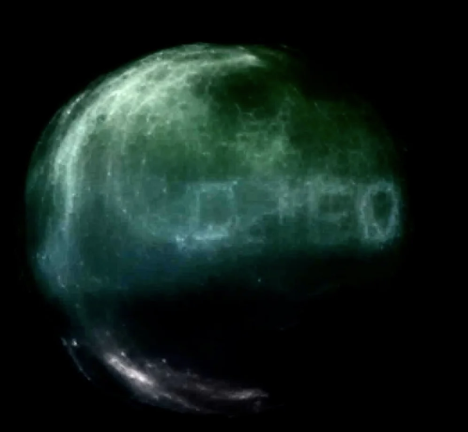
A green orb image taken from a viral social media video attributed to Chris Bledsoe has generated widespread speculation that the object displays internal letters or symbols and represents a communicating non-human intelligence. This article presents a forensic image analysis of the green orb still frame using established digital forensic techniques, including channel isolation, content detection, HSV analysis, and principal component analysis (PCA). The results show that the observed structures are consistent with computational photography artifacts, compression effects, and perceptual illusions rather than physical objects or communicative signals. This case shows how smartphone imaging pipelines and social media compression can produce compelling but misleading visual anomalies.
Background of the Case
In December 2025, a green orb image began circulating on social media platforms following a post by Chris Bledsoe, who described the image as a frame captured from 4K video footage recorded at an event at the World Forum in Wrightsville Beach, North Carolina. The post suggested that the orb contained letters or symbols and meant some form of communication.
According to available statements, more than 20 GB of high-definition video data is available, reportedly recorded using the Apple iPhone Pro device. However, only compressed social media versions of the footage are publicly available for analysis. There is no metadata in the analyzed files, because social media platforms often strip EXIF and temporal data during upload. As a result, the date, time, and exact parameters of the broadcast cannot be independently verified.
Notably, the supposed letters appear in only four paintings identified so far.
Visual Evidence Examined
Three relevant visual sources are examined:
- Initial Distant Orb Video
A short, handheld night video depicting a small white circular light at a significant distance. No foreground reference objects (trees, buildings, horizon marks) are visible, making the motion assessment unreliable. - Zoomed White “Morphing” Orb
A second, more heavily zoomed-in video shows a white object that looks organic or membrane-like. This footage exhibits characteristics consistent with point spread function distortion, a common artifact when filming sub-pixel light sources at extreme digital zoom. - Green Orb Still Frame
A highly zoomed image purportedly taken from the same or related footage. This image shows a green circular object containing shapes that some viewers interpret as letters or symbols.
Analytical Methods
The green orb still image was imported into the GIMP and Forensically beta for forensic evaluation. The following procedures are applied:
- RGB channel separation
- Sobel and gradient edge detection
- HSV edge detection
- Principal Component Analysis (PCA), with an emphasis on higher-order components
- Visual consistency checks algorithms
Each method is chosen to determine whether the observed internal structures represent physical surfaces, surfaces, or similar geometry, or whether they are products of digital processing.
result
Channel Isolation
The differentiation of the red, green, and blue channels reveals that the apparent structure continues almost exclusively in the green channel. When the red and blue channels are enlarged, no corresponding structural detail emerges. This behavior indicates sensor-driven channel survival rather than something that emits intrinsic green light.
Checking the Edge
Between Sobel, gradient, and standard edge detection algorithms, the outer boundary of the object remains constant, forming a smooth circular profile. However, the internal “letter” fails to produce strong contents of any algorithm. This indicates that the internal forms lack physical edge geometry and are not solid or surface-based parts.
HSV Edge Detection
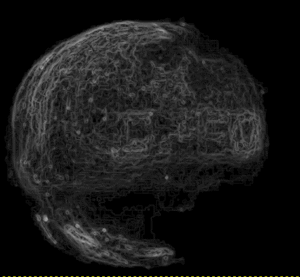
HSV edge detection produces a diffuse field of random white pixels rather than continuous edge lines. In forensic analysis, this pattern is diagnostic of chromatic noise and enhancement artifacts rather than physical structure. Such results are often used to control solid objects, surfaces, and structured craft.
Principal Component Analysis (PCA)
PCA component 3 reveals square and stair-step patterns consistent with video codec macroblocks and digital zoom artifacts. The analysis highlights the artificial segmentation similar to organic membranes, a known perceptual illusion caused by excessive sharpening, noise interaction, and eigenvector separation.
These effects are commonly observed in the analysis:
- Zoomed digital stars or planets
- Remote aircraft lights
- Image of the moon under heavy enhancement
- Night-mode smartphone footage
Considerations in Computational Photography
The camera reportedly used is an Apple iPhone Pro. Apple’s computational photography pipeline prioritizes aesthetic clarity over scientific fidelity, especially in low-light conditions. Known processes include:
- Temporal noise reduction
- Local tone mapping
- Dynamic exposure compensation
- Highlight the recovery
- Super-resolution upscaling during zoom
- Rolling shutter distortion during handheld motion
When filming isolated bright objects against a dark sky, these processes often introduce artificial color shifts, internal structures, and geometric patterns. Green orbs, plasma-like spheres, and “structured” lights are common results.
The green orbs are a known and repeated results to:
- Far point light source
- Low light smartphone imaging
- Extreme digital zoom
- Computational enhancement
- Compression artifacts
They are not, by themselves, evidence of structured craft, energy fields, or communication. Proper forensic analysis is essential before assigning unique explanations to visually compelling imagery.
Atmospheric and Sensor Effects
Atmospheric scattering, including Rayleigh scattering, contributes to:
- Blue or white haze
- Loss of contrast
- Soft glow around distant light sources
Sensor blooming is also visible, where strong light bounces off adjacent pixels, producing halos and fog-like structures. Long-exposure frame stacking further enhances these effects, especially when combined with motion and compression.
Discussion: Does the Orb Talk?
The appearance of internal symbols or letters is best explained by pareidolia – the human tendency to perceive meaningful patterns in random or ambiguous data – reinforced by AI-driven image enhancement. The fact that the “letter” appears in only four frames strongly supports an algorithmic origin rather than intentional signaling.
There are no forensic indicators supporting the presence of:
- Physical surface detail
- Constructed geometry
- Energy field
- Direct communication
However, all the analytical results converge on a false positive interpretation.
CONCLUSION
The green orb image is most consistent with a distant point light source — such as a bright star, planet, or aircraft light — rendered anomalous by extreme digital zoom, low-light computational enhancement, atmospheric effects, and video compression. While visually appealing, the object does not represent a communicating entity or UAP structure.
This case highlights the critical need for forensic image analysis in UAP investigations and shows how modern smartphone imaging systems can inadvertently produce unusual appearances from ordinary sources.
About the Author
Seth H. Feinstein is a forensic photo analyst and researcher specializing in image authenticity, digital artifacts, and false-positive UAP imagery. Don’t mistake me for a debunker. I have many unknown consequences. The data speaks for itself, and the truth is what matters.
Random white dots in HSV edge detection mean that the algorithm detects chromatic noise, not true edges.
Source link